
1. Determine the right form for you.
Refer back to the types of purchase orders list and choose the purchase order format suitable for your business.
- Standard Purchase Orders
- Planned Purchase Orders
- Blanket Purchase Orders
- Contract Purchase Orders
- Digital Purchase Orders
1. Standard Purchase Orders
Standard purchase orders are the most widely used and recognized. In this situation, the buyer is clear on the details of the purchase and can identify what item or service they're buying, the quantity, delivery schedule, and payment terms.
For example, a company that is running low on printer cartridges may place a standard purchase order because they know exactly how much they need and know when they need to have it. Here's what that purchase order could look like.
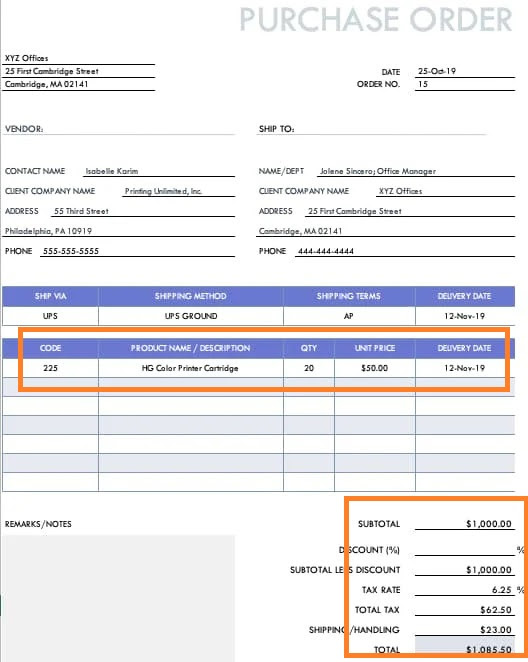
Standard purchase orders can be made for a number of different functions depending on your needs. For example, the above template could be adjusted for:
- Services to be rendered
- Subcontracting
- Consignment
2. Planned Purchase Orders
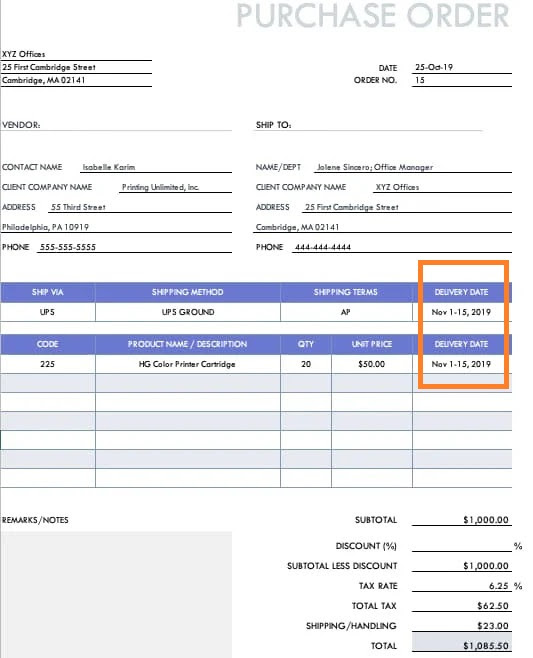
When placing a planned purchase order, a buyer is estimating the future needs of their company for the item in question by submitting a purchase order in advance. In this case, details such as the item, price, and payment terms are known, but the quantity is based on an educated guess and the delivery date is tentative.
For example, if the same company that is running low on printer cartridges places a planned purchase order, the buyer in charge would estimate how many printer cartridges they need with a more flexible delivery schedule. Here's what that purchase order might look like.
3. Blanket Purchase Orders
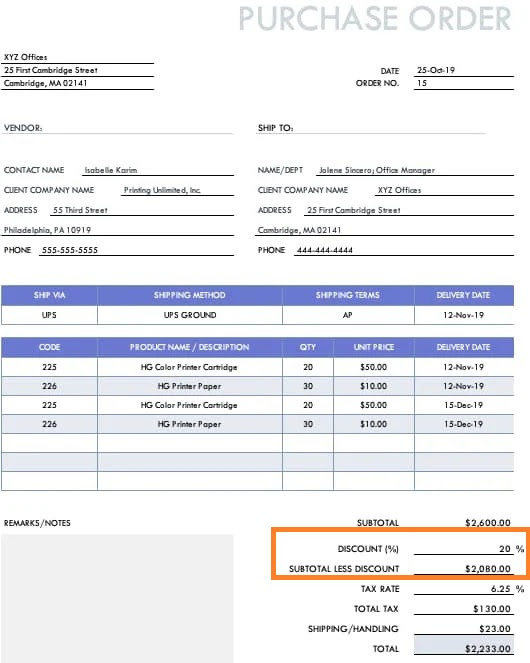
With a blanket purchase order, a buyer places multiple orders at one time to negotiate discounted pricing.
For example, if the same company can negotiate a better deal by agreeing to place multiple orders of printer cartridges and paper from a single supplier, it would consider using a blanket purchase order to acquire these items. In this scenario, here's what a purchase order could look like.
4. Contract Purchase Orders
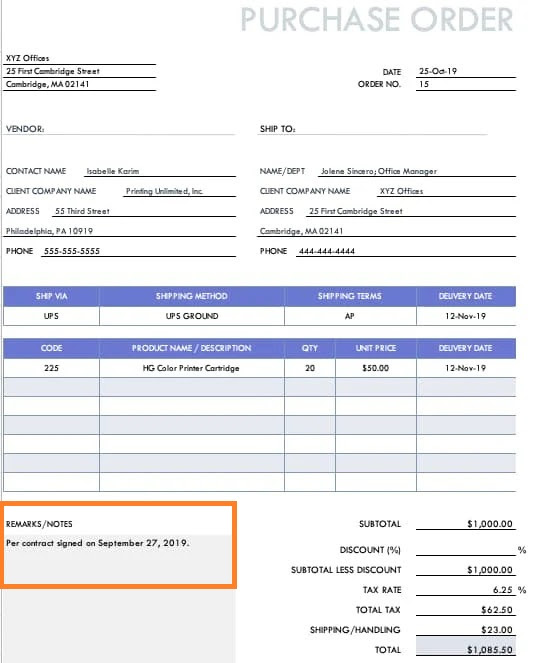
A contract purchase order is the most formal variation. In this case, the buyer and seller sign a contract outlining the terms of the purchase before a purchase order referencing the contract is issued. This type of purchase order offers the most legal protection for those involved.
Using the printer supplies example, if a company signs a contract with their supplier outlining the items, quantity, pricing, and delivery schedule and follows up with a standard purchase order, these companies would be under a contract purchase order agreement. Here's what that purchase order could look like.
5. Digital Purchase Orders
Having a set process in place for purchase orders can help the procurement process move efficiently and be mutually beneficial for both buyers and sellers.
One easy way to create and share a digital purchase order is in Microsoft Excel or Open Office. You can find pre-existing templates when you open a new spreadsheet and click on More Templates and search “invoice.”
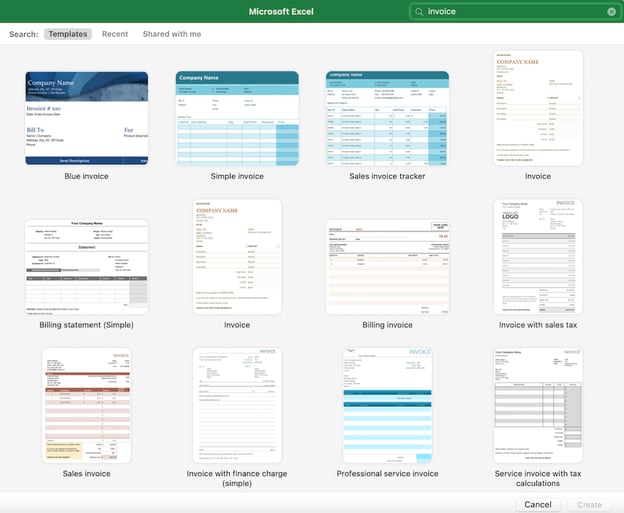
We already made the distinction between invoices and purchase orders, but you can find both under this keyword in Excel. And of course, you can edit the template of your liking to include elements specific that you need.
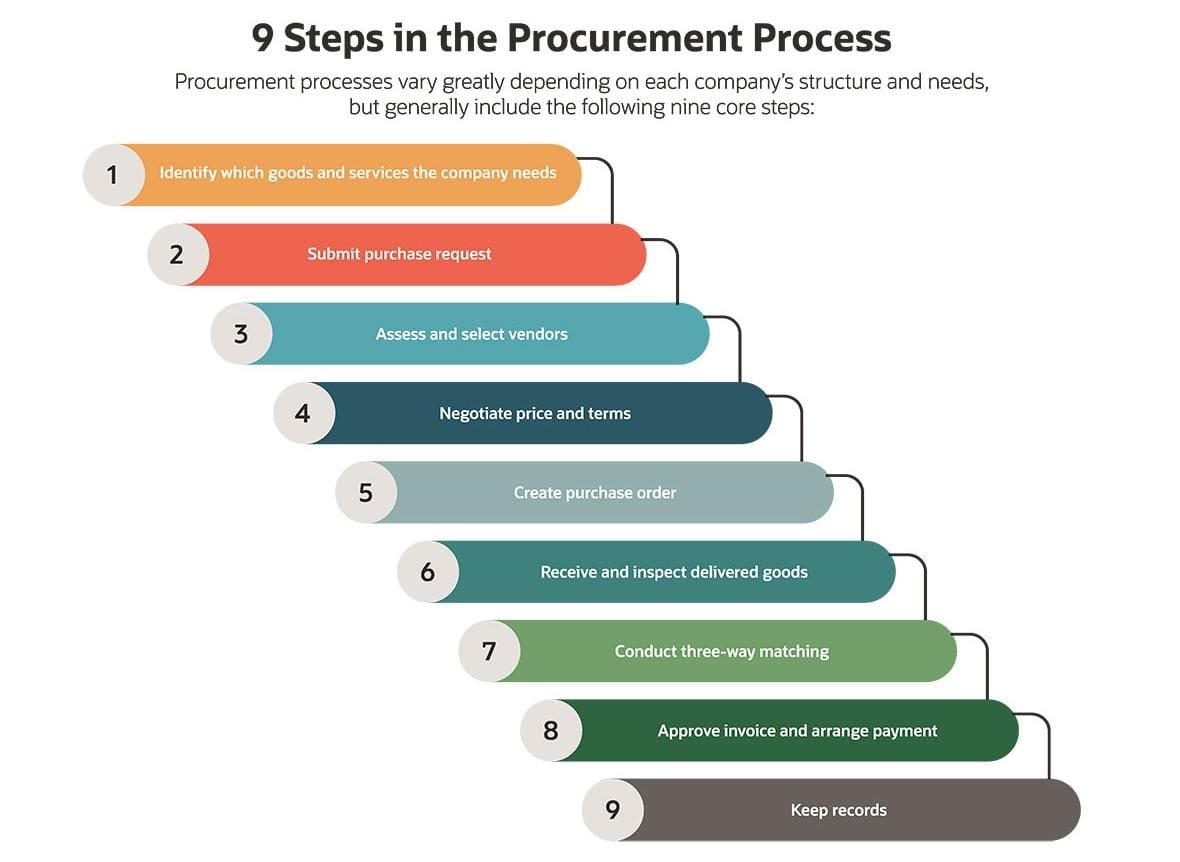
Lastly, now that we’ve gone through different types of purchase orders, let’s talk about the importance of a purchase order system.
Comments
0 comments
Please sign in to leave a comment.